Guide
How Citizen Eco-Drive Works: Light In, Time Out
The short answer
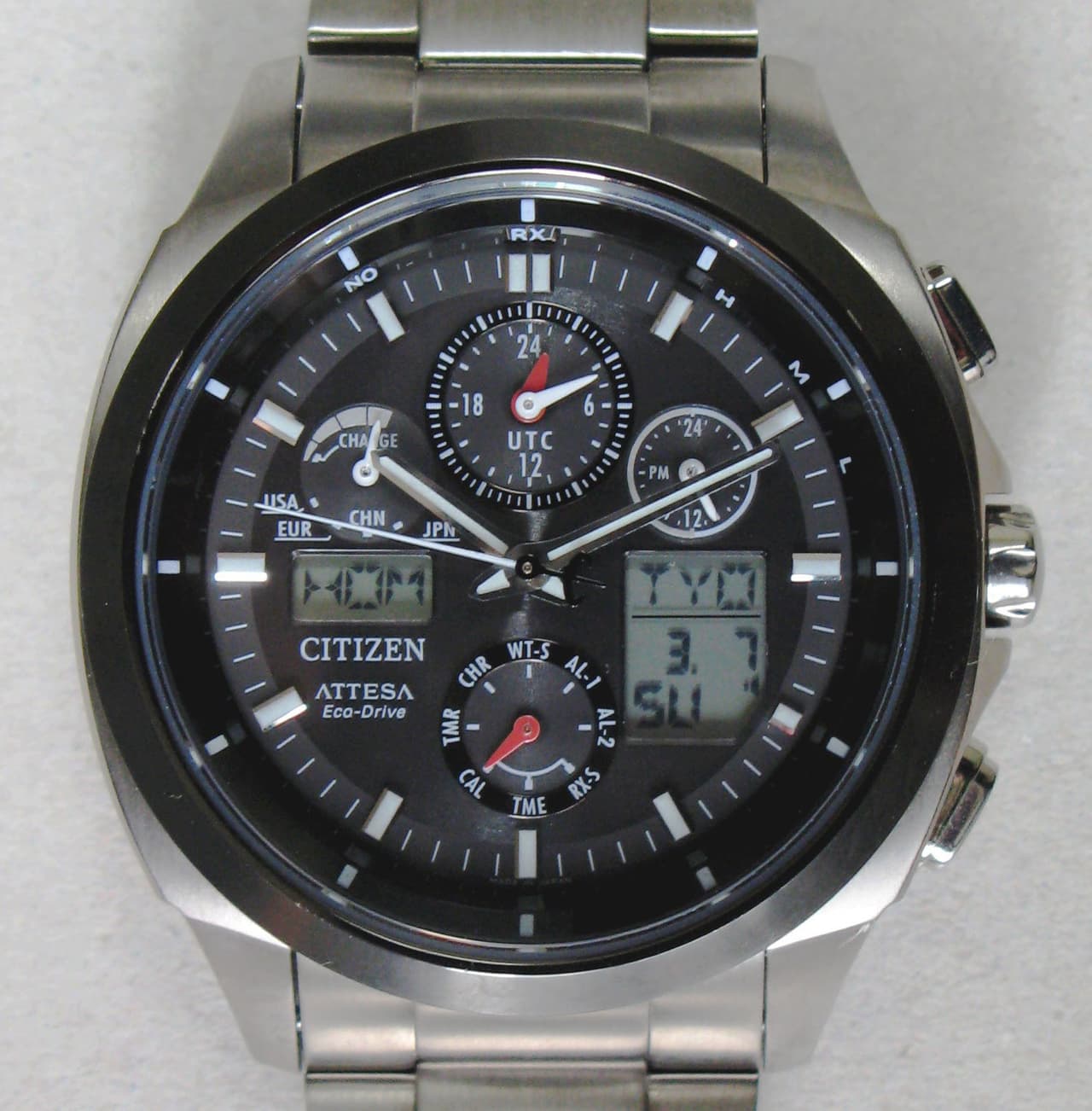
Eco-Drive is Citizen's name for a light-powered quartz watch. A solar cell converts light into electricity, a rechargeable secondary cell stores it, and the watch runs a normal quartz movement from that stored charge. Citizen's position is that light powers the watch "without the need for battery replacements."
It is a change to the power supply, not to timekeeping. Accuracy still comes from the quartz crystal, exactly as in a battery quartz watch. All figures below are Citizen's own, as of 2026-08-14.
Where the solar cell actually is
Citizen builds the cell in two main arrangements:
- Standard Solar — the cell sits under the dial, which Citizen favours for high conversion efficiency. The dial is translucent enough to pass light through to the cell, which is why so many Eco-Drive dials have a particular slightly textured look.
- Ring Solar — "a ring-shaped solar cell sits on the circumference of the dial," freeing the dial centre for opaque materials and finishes.
The energy goes into a lithium secondary (rechargeable) cell. This is the part people misunderstand: it is not a coin cell you swap at a counter every few years, it is a storage cell being continuously topped up.
What actually charges it
Citizen states the technology "converts any kind of light, from bright sunshine to dim indoor lighting." Office and household lighting does contribute — it is simply far weaker than sunlight, so it charges much more slowly.
For a watch in normal rotation Citizen recommends exposing it to five or six hours of direct sunlight per month. A watch worn regularly and left somewhere bright when it is off the wrist generally stays topped up without any deliberate effort.
How long it runs in the dark
This is where specifications get quoted loosely elsewhere, so the distinctions matter:
| Situation | Citizen's stated figure |
|---|---|
| Fully charged, kept in complete darkness | Runs for more than six months |
| Select models with power save function | Run time of up to seven years |
| A 2023 model, single charge | Capable of running 365 days |
The power save function is what makes the multi-year figures possible. Citizen describes it as activating when the watch has not seen light for a certain length of time: "the hands stop moving to enable the system to save power," while the watch "continues to tell the correct time internally." Bring it back into light and the hands jump to the correct current time — it was never actually lost.
Note the qualifier Citizen itself uses: select models. Seven years is not a blanket Eco-Drive specification, and any single figure you see quoted for "Eco-Drive" as a category is worth checking against the specific caliber.
One detail that is widely misapplied
Citizen's transparent solar cell is genuinely remarkable: the amorphous silicon power-generating element is "formed into a film just 6 microns thin and arranged in 257 strips spaced 94 microns apart," invisible to the naked eye — against a human hair at roughly 100 microns for scale.
Those numbers describe the transparent solar cell developed for the Eco-Drive VITRO, not every Eco-Drive watch. They get repeated online as though they were a general Eco-Drive specification. They are not. A standard Eco-Drive uses a cell under the dial, which does not need to be transparent at all.
Where Eco-Drive came from
Citizen released the world's first light-powered analogue watch in 1976, called the Crystron Solar Cell. The Eco-Drive name itself came in the mid-1990s, roughly two decades later, as the branded umbrella for the light-powered technology once run times and cell capacity had matured.
So the technology is about a decade older than the name — useful to know when reading dated claims about "the first Eco-Drive."
Is it the right choice for you
Yes, if you want a watch that keeps correct time and asks nothing of you. No winding, no battery appointments, no scheduled downtime.
Probably not, if what you want from a watch is a mechanism to engage with — in which case see the movement types guide for what mechanical and Spring Drive offer instead.
If the light-powered idea appeals but you also want the watch to correct its own time, Casio's Oceanus line pairs solar charging with radio and Bluetooth time sync.
Related reading
Mechanical vs quartz vs solar vs Spring Drive for how light-powered fits against the alternatives, the Casio Oceanus guide for solar plus radio correction, and the Japanese watch brands guide for where Citizen sits in the wider landscape.
Sources
FAQ
- Does an Eco-Drive watch need a battery change?
- No — there is no disposable battery. Citizen states that light powers the watch "without the need for battery replacements." The energy is stored in a rechargeable lithium secondary cell that light continuously tops up, rather than a coin cell that gets swapped.
- How long does an Eco-Drive run in the dark?
- Citizen states that a fully charged Eco-Drive runs for more than six months in complete darkness. Select models with the power save function have a stated run time of up to seven years, and a 2023 model is capable of 365 days on a single charge. The seven-year figure applies only to specific models, not to Eco-Drive generally.
- Can indoor lighting charge an Eco-Drive?
- Yes. Citizen says the technology converts "any kind of light, from bright sunshine to dim indoor lighting," though indoor light is far weaker and charges much more slowly. Citizen recommends exposing the watch to five or six hours of direct sunlight per month.
This article is for information only and is not investment, valuation, or authentication advice. Prices, availability and release dates change — always confirm with the retailer or official source linked in the article before buying.