Guide
Mechanical vs Quartz vs Solar vs Spring Drive: Which Japanese Watch Movement Is Right for You?
The short answer
Buy mechanical if you want the object and accept roughly a quarter-minute of drift a day. Buy quartz if you want to set it and forget it. Buy solar (light-powered) if you want quartz convenience without ever thinking about a battery change. Buy Spring Drive if you want a mainspring watch that keeps near-quartz time and are willing to pay Grand Seiko money for it.
Everything below is the manufacturers' own published figures, with the caliber named so you can check them yourself. Accuracy specs are quoted as of 2026-08-14.
The four types at a glance
| Mechanical | Quartz | Solar (light-powered) | Spring Drive | |
|---|---|---|---|---|
| Power source | Mainspring | Battery | Light → rechargeable cell | Mainspring (no battery) |
| Timing reference | Balance wheel + hairspring | Quartz crystal | Quartz crystal | Quartz crystal |
| Typical published accuracy | Seconds per day | Seconds per month | Seconds per month | Seconds per month |
| Routine upkeep | Wear or wind it; periodic service | Battery change | Expose to light | Wear or wind it; periodic service |
| Seconds hand | Ticks in beats | One step per second | One step per second | Glides continuously |
Mechanical: rated per day, and honestly so
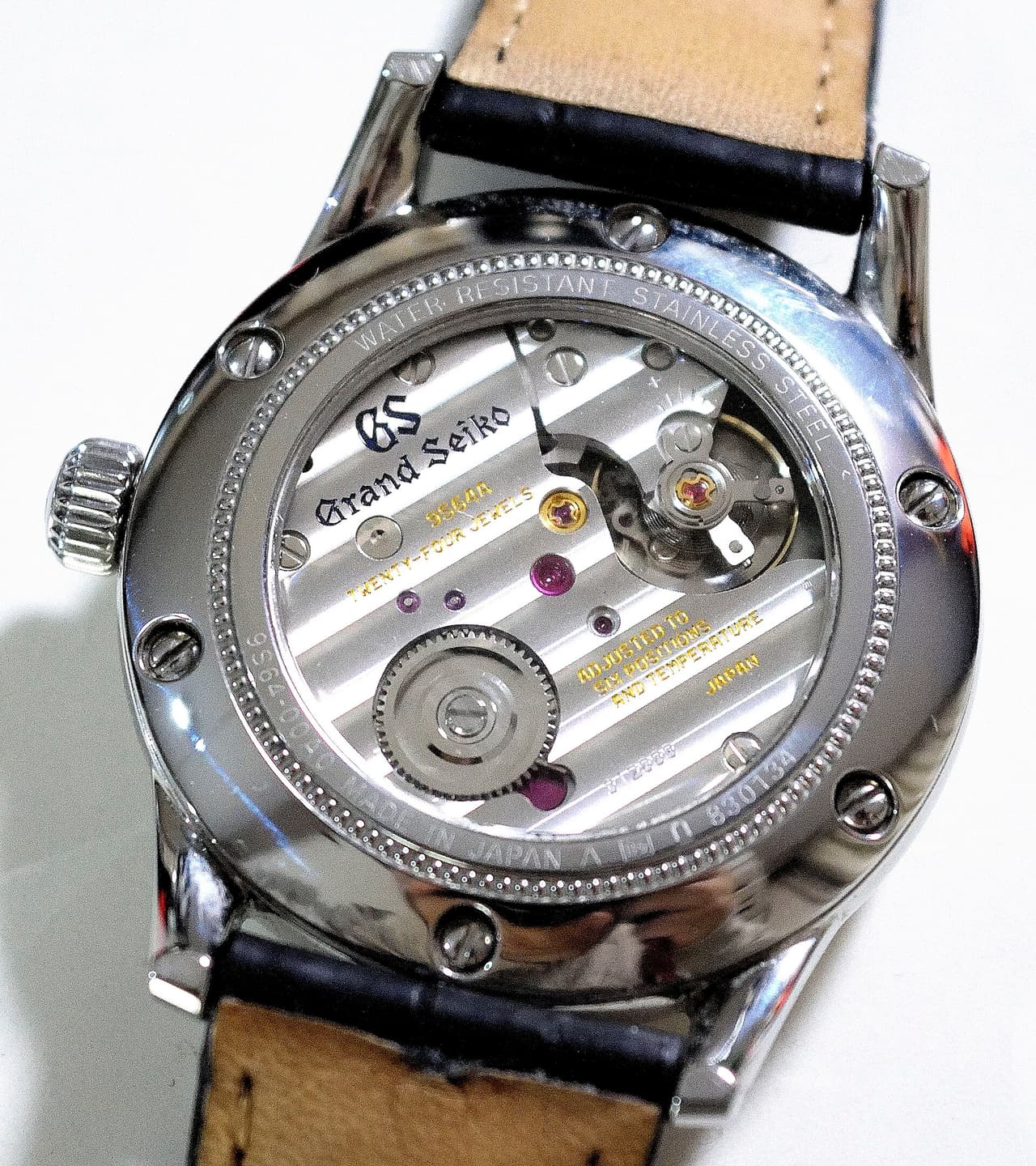
A mechanical watch stores energy in a mainspring and releases it through an escapement. Automatics wind themselves from wrist motion; hand-wound calibers you wind yourself.
The headline number is the daily rate. Seiko's widely used Caliber 6R35 is specified at +25 to −15 seconds per day, beating at 21,600 vibrations/hour, with a power reserve of approximately 70 hours and 24 jewels. That is not a defect — it is the physics of a metal spring and a mechanical oscillator, and Seiko is unusually direct about it.
Read the small print, though: Seiko qualifies that figure as applying "only if worn on the wrist in a temperature range of 5°C to 35°C." A watch left in a drawer, or worn in a Hokkaido winter, is outside the conditions the specification describes. Sealed-movement workhorses like the NH35 are quoted the same way.
Seiko's own instruction manual explains why the number is a range rather than a point. It states that "loss/gain changes according to the position of the watch, which is dependent on the conditions of use, such as the length of time during which the watch is worn on the wrist, arm movement, and whether the mainspring is wound up fully or not." It adds that mechanical watches "tend to lose time at high temperatures while they tend to gain time at low temperatures," and that the mainspring's driving force "varies between when fully wound and immediately before it is unwound."
Seiko also notes that daily rate is properly assessed over about a week, not a single day. So a watch that gains eight seconds one day and loses two the next is behaving normally.
Practical read: if you wear it most days and it settles somewhere inside the stated window, it is working as sold.
Quartz: rated per month, and cheap to be excellent
A quartz movement uses a battery to drive a quartz crystal, and the crystal's oscillation is divided down to one pulse per second. The accuracy gain over mechanical is roughly two orders of magnitude.
An ordinary Seiko quartz caliber such as the 8T63 is specified at ±15 seconds per month with a battery life of approximately 3 years. That is a mass-market movement in an inexpensive watch, and it will comfortably out-time any standard mechanical watch at any price.
At the other end, Grand Seiko's 9F quartz is specified at ±10 seconds per year. Grand Seiko gets there by treating the crystal as a selected component rather than a commodity: oscillators go through a three-month aging process under applied voltage "so that their characteristics stabilize," and only those meeting its standards are used. The movement also measures temperature 540 times a day and applies compensation for the resulting drift, and its twin pulse control motor fires "two consecutive steps per second" so the movement can swing the long, heavy hands Grand Seiko prefers.
Practical read: quartz is where the accuracy-per-yen curve is steepest. If timekeeping is the goal, this is the answer.
Solar: quartz, minus the battery change
Solar is not a separate timekeeping technology — it is a quartz movement with a different power supply. A photovoltaic cell converts light into electricity and stores it in a rechargeable secondary cell, so the accuracy comes from the quartz crystal exactly as above, while the ownership changes: no battery appointments.
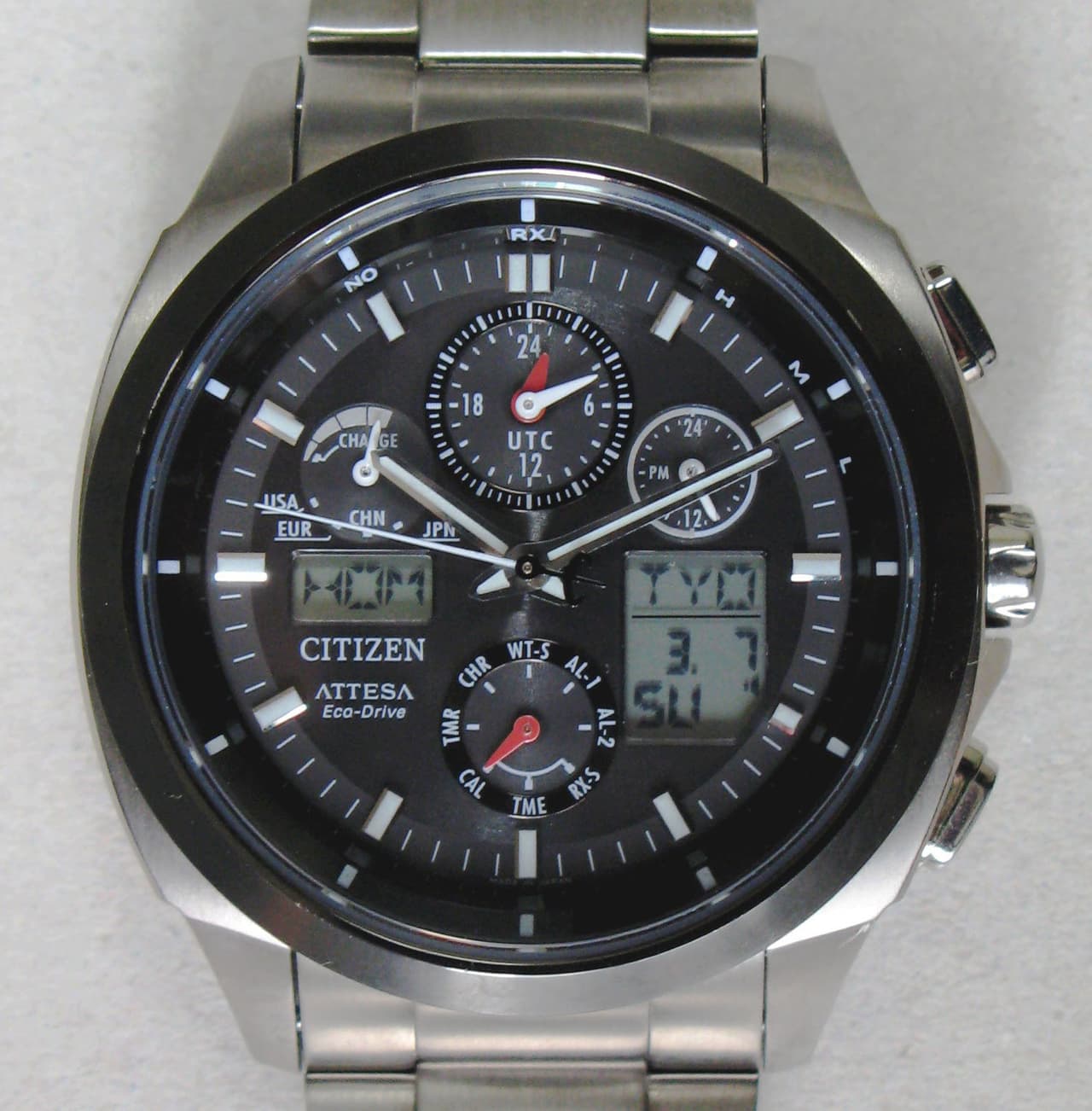
Citizen's Eco-Drive is the reference implementation and has its own guide here. Casio's Tough Solar appears throughout the G-Shock range and in the premium Oceanus line, usually paired with radio or Bluetooth time correction — which sidesteps the accuracy question entirely by resynchronising the watch against an external time signal.
Practical read: if the appeal of quartz is that you never think about it, solar removes the last chore.
Spring Drive: a mainspring regulated electronically
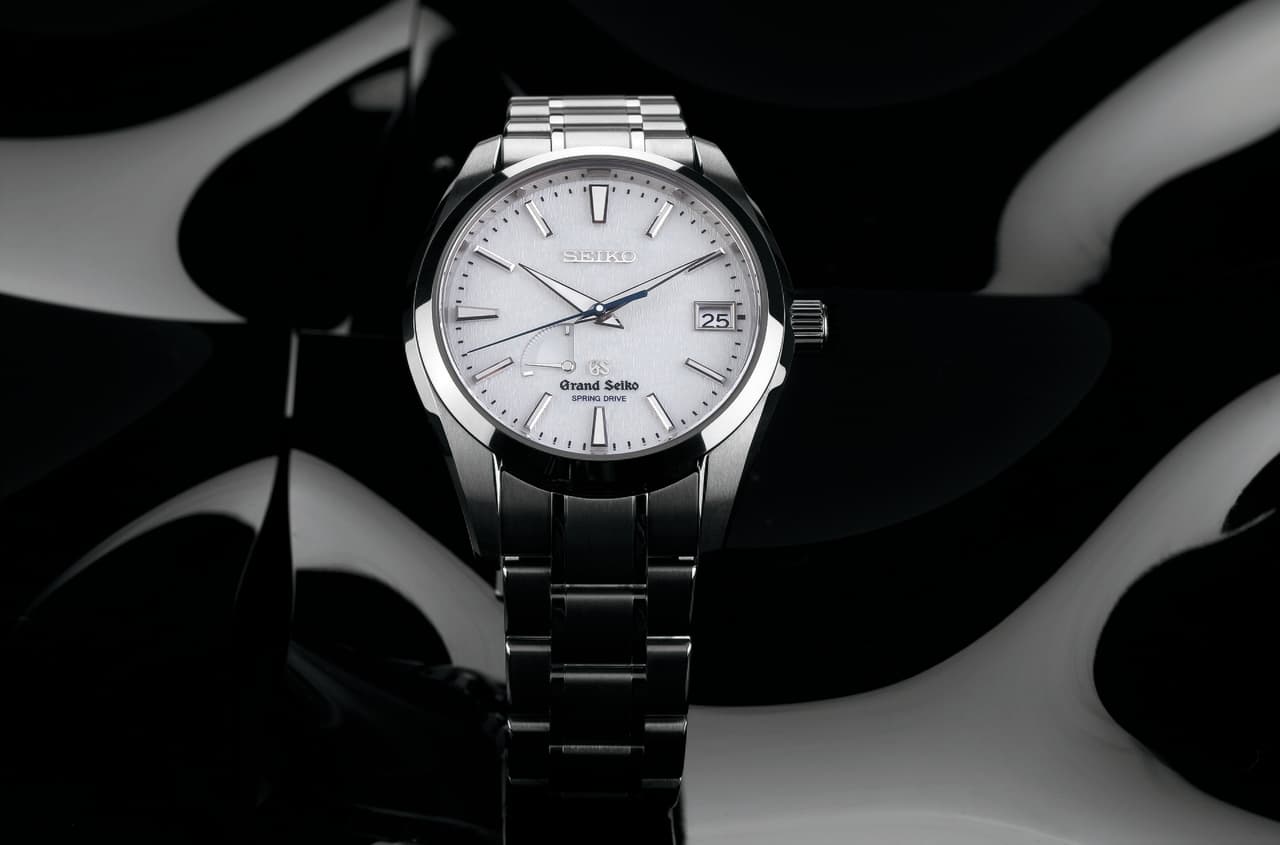
Spring Drive is Seiko's hybrid and does not sit in either camp. The mainspring supplies all the power — there is no battery — while a quartz crystal supplies the timing reference. Grand Seiko describes it as a movement whose "sole power source is a mainspring, which drives a series of gears," where "a rotor, connected to the end of these gears, generates a small electrical charge that activates an electronic circuit and quartz oscillator."
Caliber 9R65 is specified at ±15 seconds per month (±1 second per day) with a power reserve of approximately 72 hours. Because a magnetic brake regulates a freely spinning wheel instead of an escapement stopping and releasing a balance, the seconds hand glides rather than ticks — the most visible tell that you are looking at one.
Our Spring Drive explainer covers the Tri-synchro regulator in detail.
So which one
- You want a watch as an object, and you enjoy the ritual. Mechanical. Accept the daily rate.
- You want the correct time with zero thought. Quartz. An inexpensive one already beats an expensive mechanical.
- You want quartz but hate battery changes. Solar.
- You want mainspring romance at near-quartz accuracy, and the budget is there. Spring Drive.
There is no ranking here, only a match between what a movement does and what you want from it. A ¥30,000 solar watch and a ¥900,000 Spring Drive are both fully successful designs against different briefs.
Related reading
Spring Drive explained for the hybrid in depth, How Citizen Eco-Drive works for the light-powered side, the NH35 movement reference for the workhorse automatic, and the Japanese watch brands guide for who makes what.
Sources
- Caliber 9R65 | Spring Drive | Grand Seiko (official movement specification)
- Quartz | Grand Seiko (official 9F movement page)
- Accuracy of mechanical watches | Seiko 6R31/6R35/6R38 instructions (official)
- Specifications: Caliber 6R31/6R35/6R38 | Seiko instructions (official)
- SSB477 specifications (Caliber 8T63) | Seiko Watch Corporation
- Eco-Drive | CITIZEN Technologies (official)
FAQ
- Is a mechanical watch less accurate than a cheap quartz one?
- Yes, and by a wide margin. Seiko specifies its 6R35 automatic at +25 to −15 seconds per day, while its mass-market 8T63 quartz caliber is specified at ±15 seconds per month. People buy mechanical watches for the mechanism and the ownership experience, not for timekeeping.
- Does a solar watch ever need a battery replacement?
- It has no conventional battery to replace. A light-powered watch charges a rechargeable secondary cell from light, and Citizen states that light powers the watch "without the need for battery replacements." If a very old watch stops holding a charge, that is a service-centre matter rather than a routine battery swap.
- Why does Spring Drive have a gliding seconds hand?
- Because it has no escapement. A conventional mechanical watch's escapement stops and releases the balance, producing discrete beats. Spring Drive instead regulates a continuously spinning glide wheel with an electromagnetic brake, so the motion is uninterrupted and the hand sweeps rather than ticks.
This article is for information only and is not investment, valuation, or authentication advice. Prices, availability and release dates change — always confirm with the retailer or official source linked in the article before buying.