Guide
Spring Drive Explained: How Seiko's Hybrid Movement Works

What Spring Drive is, in one breath
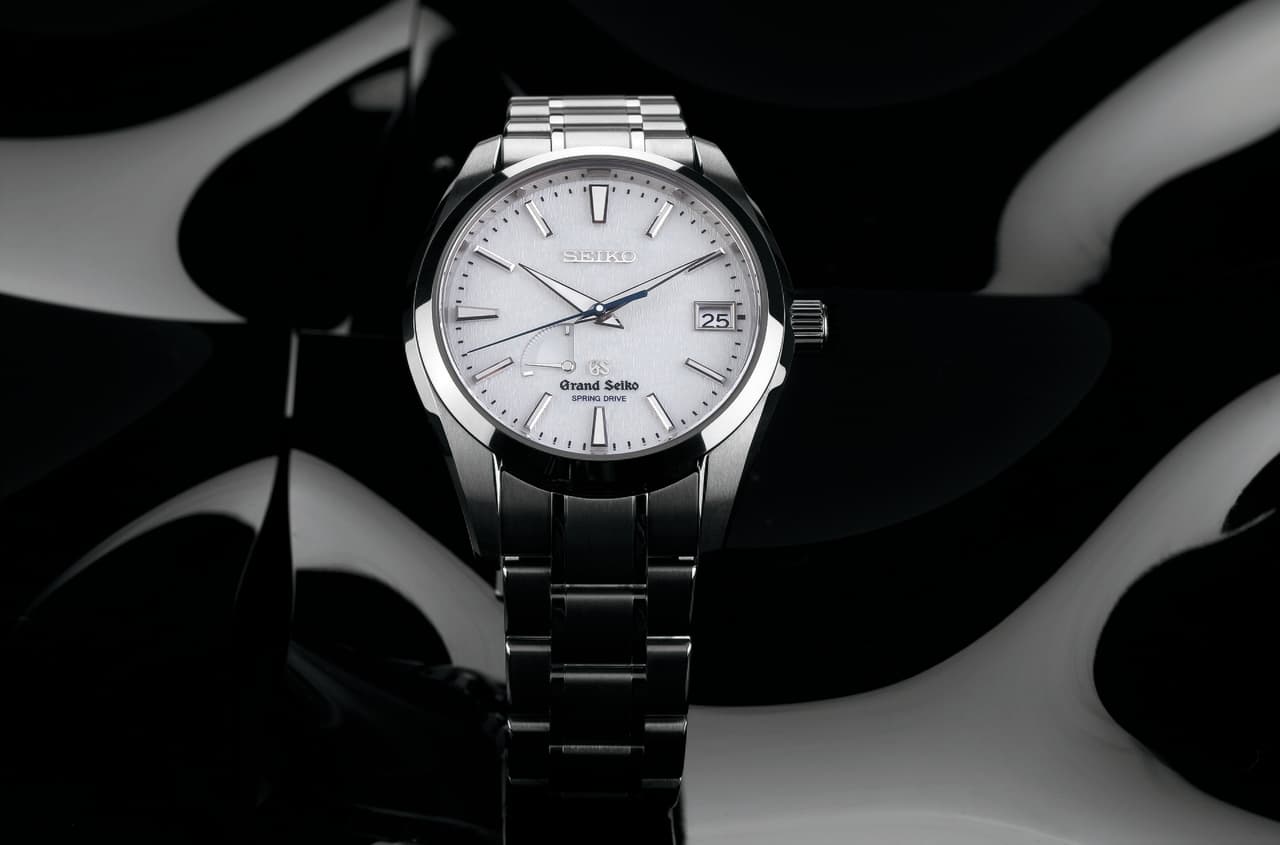
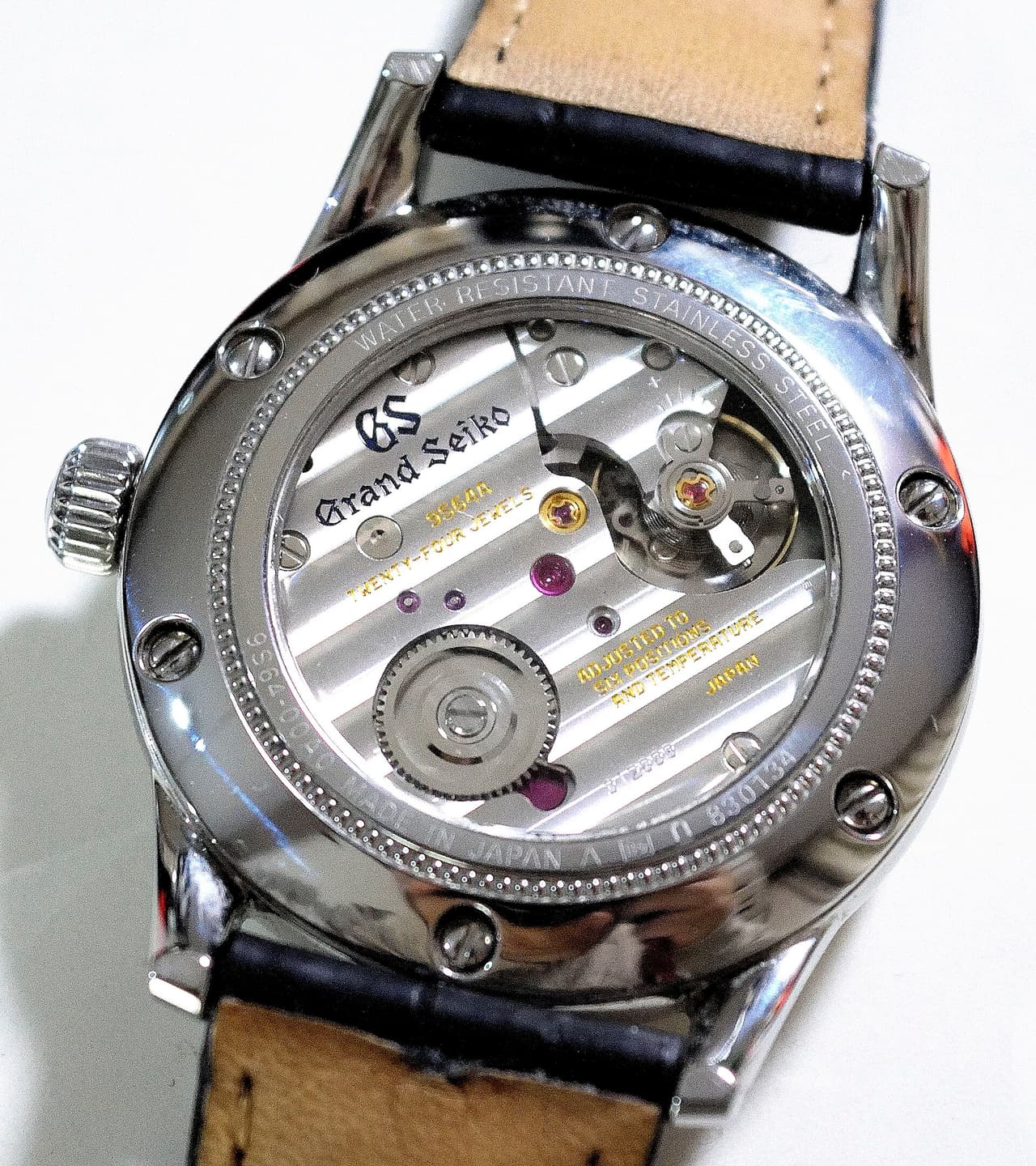
Spring Drive is a hybrid watch movement developed by Seiko in which a conventional mechanical mainspring supplies all of the power, while a quartz crystal supplies the timekeeping reference. It has no battery. Instead of a traditional escapement, it uses a component called the Tri-synchro regulator to govern the release of energy electromagnetically. The result is a mainspring-powered watch regulated to quartz-adjacent precision, with a seconds hand that glides rather than ticks.
Seiko brought the first Spring Drive movement to market in 1999 as Caliber 7R68, following prototypes documented in 1982 and 1993, according to the Grand Seiko GS9 Club chronicle.
How the Tri-synchro regulator works
The name Tri-synchro (three synchronised energies) describes the three forms of energy the regulator manages: mechanical, electrical, and electromagnetic. The sequence, as described on Seiko's and Grand Seiko's official pages, runs like this:
- Mechanical. The mainspring unwinds and drives a rotor Seiko calls the glide wheel. Grand Seiko compares the arrangement to "a pedal-powered bicycle light" — the moving wheel turns a small generator.
- Electrical. As the glide wheel spins, it works with a stator (a coil-wound component) to generate a small current. That current powers an integrated circuit (IC) and a quartz oscillator, which vibrates at exactly 32,768 Hz — the same reference frequency used in a standard quartz watch.
- Electromagnetic. The IC compares the glide wheel's actual rotation against the quartz reference. The glide wheel should turn eight full revolutions per second. Whenever the IC detects it running too fast, it applies a magnetic brake to slow it back to speed.
Because a magnetic brake regulates a freely spinning wheel — rather than a lever escapement stopping and releasing a balance — there is no back-and-forth impulse and no ticking. Grand Seiko describes the motion inside as circular and in a single direction.
Spring Drive vs. mechanical vs. quartz
Spring Drive borrows one defining trait from each of the two established movement types, which is why it does not fit neatly into either category.
| Aspect | Mechanical | Quartz | Spring Drive |
|---|---|---|---|
| Power source | Mainspring | Battery | Mainspring (no battery) |
| Timing reference | Balance wheel + hairspring | Quartz crystal, 32,768 Hz | Quartz crystal, 32,768 Hz |
| Speed regulation | Lever escapement | Stepping motor | Electromagnetic brake on glide wheel |
| Seconds hand | Discrete beats (ticks) | One step per second | Continuous glide |
In short: Spring Drive takes the mainspring and hand-wound/automatic power delivery of a mechanical watch, and the quartz-crystal timing reference of an electronic watch, and joins them with an electromagnetic regulator in place of a mechanical escapement.
The glide-motion seconds hand
The most visible signature of Spring Drive is the seconds hand. Seiko states that "Spring Drive is the only watch in the world to express the natural and continuous flow of time," because the hand sweeps in an unbroken glide rather than the beat-by-beat sweep of a mechanical watch or the once-per-second step of quartz.
This is a direct consequence of the regulation method: with no escapement to arrest and release the gear train, the glide wheel turns continuously and the seconds hand moves with it. On Spring Drive chronographs, the same principle lets the hand stop "precisely when the button is pressed, not at the nearest second," per Seiko.
Accuracy across the 9R family
Spring Drive accuracy figures depend on the specific caliber. General 9R Spring Drive calibers are rated at ±15 seconds per month (about ±1 second per day), per the GS9 Club, and Seiko's own knowledge page summarises this as "accurate to 1 second per day."
Higher-specification movements go further. The GS9 Club lists the 9RA2, 9RA5, and 9R01 at ±10 seconds per month (±0.5 second per day). Grand Seiko's official movement page rates its U.F.A. (Ultra Fine Accuracy) models at ±20 seconds per year (±3 seconds per month).
Across the range, power comes from the mainspring alone. Seiko cites a 72-hour power reserve on the movements it describes, and notes the use of its proprietary SPRON 510 mainspring alloy for extended output. These are manufacturer specifications; real-world timekeeping varies with wear patterns, temperature, and how fully the watch is wound.
Sources
FAQ
- Is Spring Drive a quartz watch or a mechanical watch?
- Neither, exactly — it is a hybrid. The power comes entirely from a mechanical mainspring with no battery, but the timekeeping is regulated by a quartz crystal vibrating at 32,768 Hz. Seiko replaces the traditional escapement with its Tri-synchro regulator, which uses an electromagnetic brake to control the glide wheel.
- How accurate is Spring Drive?
- It depends on the caliber. General 9R Spring Drive calibers are rated at ±15 seconds per month (about ±1 second per day). Higher-end movements such as the 9RA2, 9RA5, and 9R01 are rated at ±10 seconds per month (±0.5 second per day), and Grand Seiko rates its U.F.A. models at ±20 seconds per year. Real-world results vary.
- Why does the Spring Drive seconds hand glide instead of tick?
- Because there is no escapement to stop and release the gear train. The glide wheel spins continuously in one direction — eight revolutions per second — and is regulated only by an intermittent magnetic brake, so the seconds hand moves in a smooth, uninterrupted glide rather than the discrete beats of a mechanical watch or the once-per-second step of quartz.
This article is for information only and is not investment, valuation, or authentication advice. Prices, availability and release dates change — always confirm with the retailer or official source linked in the article before buying.